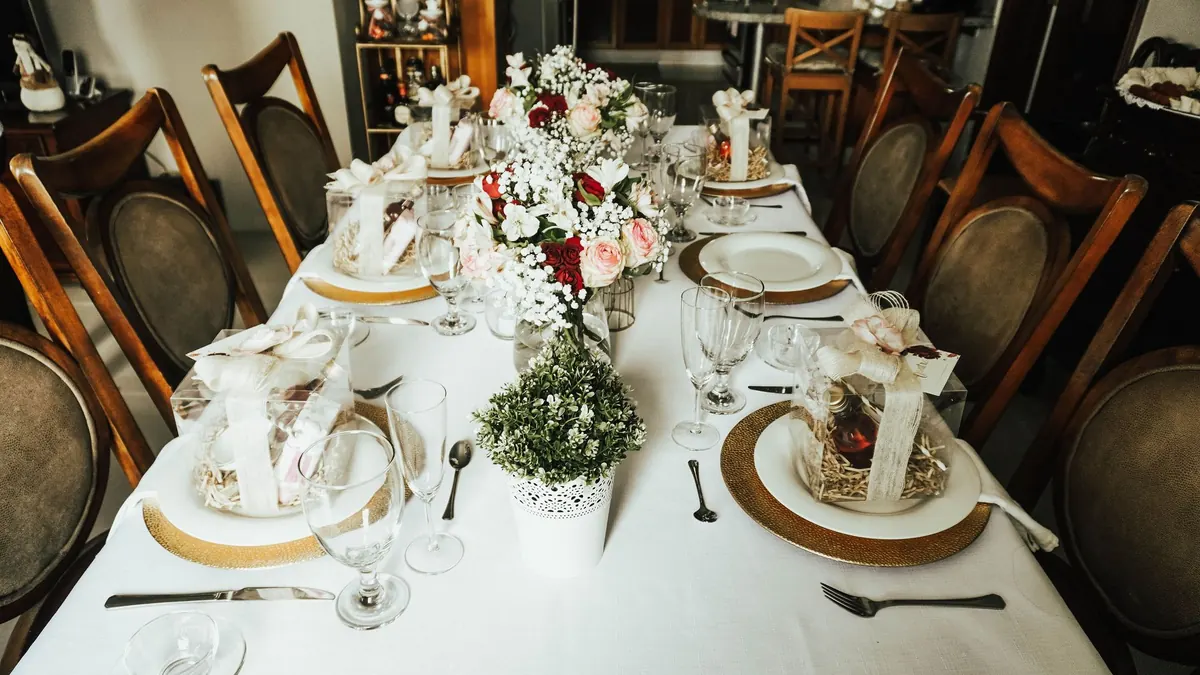
There is a moment at almost every British dinner party when the conversation tilts towards politics. It tends to arrive after the main course, somewhere between the second glass and the cheese, and it never announces itself. One guest mentions a strike. Another mentions the state of the trains. Somebody mutters about the council, and the table quietly divides into two camps that were happily discussing a friend's new kitchen ten minutes earlier.
This is not automatically a disaster. Handled with a little care, politics can be the most interesting half-hour of the evening. Handled badly, it ends with someone scrubbing a pan in furious silence. The difference rarely comes down to which side you take. It comes down to a few avoidable mistakes.
Assuming you know how everyone votes
We all carry a mental map: the plumber votes one way, the lecturer another, the bloke with the old Land Rover a third. That map is unreliable, and voicing it is insulting. "I wouldn't have had you down as a Tory" is not a compliment, whichever side of the table you sit on.
Guessing wrong is embarrassing. Guessing right is worse, because you have just told a friend that you think their politics are written on their face, their postcode or their accent. Better to ask a genuine question and listen to the answer.
Related to this is the outright ask: so who did you vote for? The ballot is secret for good reasons. Treating it as a conversational party favour puts people in the position of either lying, refusing or admitting something they did not intend to disclose. There is no good outcome.
Mistaking the table for a debate stage
A dinner party is not Question Time, and it is certainly not a hustings. There is no moderator, no clock and no audience scoring your performance. There are just people holding forks.
Long speeches lose rooms
If your contribution runs longer than three sentences, you have stopped talking with people and started talking at them. Briefer is more persuasive. Make the point, then stop, and let somebody else pick it up. If it was a good point, they will.
Winning is not the goal
The moment you start keeping score — dismantling an argument, landing a line, waiting for the table to applaud — the evening has turned into something else. You may be right, and you will still be the person who soured the pudding.
Treating disagreement as a moral failure
There is a wide gap between "I think that policy is wrong" and "I can't believe anyone would think that." The first invites a reply. The second invites a retreat, or a fight.
Moralising also backfires on its own terms. People do not change their minds when they are being told off; they harden, restate and dig in. If the aim is to be understood, or even to shift somebody a millimetre, then the tone matters as much as the argument.
One habit worth borrowing: concede something out loud. Almost every political position contains a reasonable concern underneath it, even when you dislike the proposed remedy. Saying so costs you nothing and usually takes the temperature of the room down several degrees.
Reaching for a fact you half-remember
Numbers arrive at British dinner tables with great confidence and no footnotes. A figure that sounded convincing on the radio last Tuesday becomes, by Saturday, a settled fact — and somebody at the table will know that it is not, which puts the rest of us in the awkward position of watching a friend stand on a plank over a pond.
If you are not sure, say so. "I think it's roughly that, but don't quote me" is a perfectly respectable sentence. So is "I don't know the exact figure, but the broader principle bothers me." Describing the principle is usually more interesting than reciting the statistic anyway. Watch out, too, for "everyone knows" — it is a claim pretending to be evidence.
Small moves that keep a table civil
None of this requires you to avoid politics altogether. It requires a bit of craft. Here are the moves that do most of the work:
- Read the room first. Who is here, who is tired, who has spent all week arguing with strangers on the internet?
- Ask before you assert. "What do you make of it?" opens a conversation; a declaration invites a duel.
- Attack the argument, not the person. Ideas are fair game. Someone's character or education is not.
- Use "I" more than "you". "I'd rather the money went elsewhere" is far easier to answer than "you're being naive".
- Let a silence sit. Not every remark needs an immediate rebuttal. A pause is not agreement.
- Notice the two-person spiral. When the same pair start circling, somebody else should change the subject — gently, with a question about the garden.
Remember that somebody is hosting
Hosts have privileges. They can steer, refill a glass, introduce a new topic or suggest coffee in the other room. Guests have duties: do not hijack the evening, do not recruit the table to your cause, and do not use somebody's spare bedroom as a platform.
If you are the host and things are heading south, change the subject with a question that has nothing to do with politics. It works almost every time, because people are generally relieved.
A short exit strategy, and a final thought
You can leave a political conversation without storming out. Try one of these:
- Find the bridge: "We're never going to settle this over the table — is anyone else for pudding?"
- Be honest rather than rude: "I'm going to stop there, I've said my bit and I'd rather enjoy the rest of the evening."
- Ask about something concrete instead: a holiday, a new job, the dog.
- Let the other person have the last line. It costs you nothing and it ends the exchange.
Most of us hold our political views because of something real: where we grew up, what we do for a living, who we look after. That is worth remembering when somebody says something you find maddening. You are not usually arguing with an idiot. You are arguing with a person whose life has taken a different shape from yours.
Friendships outlast governments. Whatever happens at the next election, you will still be sharing a table with these people in the spring, and you will want the conversation to be good. So make the point, hear the reply, and pass the wine.